
The Building Seismic Safety Council (BSSC) deals with the complex technical, regulatory, social and economic issues involved in developing and promulgating building earthquake risk mitigation provisions. Established in 1979, the council’s purpose is to enhance public safety by providing a national forum that fosters improved seismic planning, design, construction and regulation in the building community.
In 1977, Congress passed the Earthquake Hazards Reduction Act to protect the lives of building occupants, during an earthquake and mitigate the impact of such disasters on the national economy. The law established the National Earthquake Hazards Reduction Program (NEHRP). BSSC, under contract with the Federal Emergency Management Agency (FEMA), develops and maintains a key resource — the NEHRP Recommended Seismic Provisions for New Buildings and Other Structures. The Provisions are used as the primary resource for the professional design standard ASCE/SEI 7 Minimum Design Loads for Buildings and Other Structures.

“For more than four decades, the Building Seismic Safety Council has played a vital role in safeguarding communities by advancing the science and practice of earthquake-resistant design. Through collaboration among engineers, researchers, code officials, and policymakers, we develop and maintain the nation’s seismic design standards. Our work exemplifies NIBS’ mission to apply building science for the public good—creating safer, stronger, and more resilient communities.”
To evaluate research findings, practices, and fields investigations to aid in developing seismic safety provisions
To promote the adoption of provisions by the national standards and model building codes, and advise government bodies on their programs of research, development and implementation.
BSSC’s success with the Provisions is due to the efforts of its members and volunteer experts, including engineers, seismologists, architects, academics, researchers, code officials, manufacturers and suppliers.
Howard University
University of Colorado Boulder
ARCADIS (ret.)
Senior Director, Provisions & Standards
The NEHRP Recommended Provisions for New Buildings and Other Structures embodies the state–of–knowledge criteria for the design and construction of buildings subject to earthquake hazards. The techniques and technologies contained in this resource document are diffused into several national standards, including the American Society of Civil Engineers ASCE–7 Design Standard for Minimum Loads that are referenced by the model building codes developed by the International Code Council (ICC).
The Provisions are developed by the Provisions Update Committee (PUC), a technical committee of seismic experts that identify and apply the most advanced seismic technology available. The committee is supported by expert Issue Teams (ITs) that address specific aspects of seismic design methodology and construction. These committee and team members ensure that lessons learned from the building performance during the earthquakes, as well as new research to improve earthquake resistance, are reflected in state–of–the–art seismic requirements. The ITs develop proposals for requirements that are balloted by the PUC according to BSSC’s consensus process, and subsequently balloted by its Professional Organizations (POs).
| Member | Affiliation | Role |
|---|---|---|
| John Hooper (Chair) | Magnusson Klemencic Associates | Chair |
| Robert Pekelnicky (Vice Chair) | Degenkolb Engineers | Vice Chair |
| Kelly Cobeen | Wiss, Janney, Elstner Associates, Inc. | Voting Member |
| Daniel Dolan | Washington State University | Voting Member |
| S.K. Ghosh | S. K. Ghosh Associates LLC | Voting Member |
| Emily Guglielmo | Martin/Martin Consulting Engineers | Voting Member |
| James Harris | J. R. Harris & Company | Voting Member |
| Jon Heintz | Applied Technology Council | Voting Member |
| John Hochwalt | KPFF CONSULTING ENGINEERS | Voting Member |
| Sandy Hohener | Degenkolb Engineers | Voting Member |
| Gyimah Kasali | RUTHERFORD + CHEKENE | Voting Member |
| Dominic Kelly | Simpson Gumpertz & Heger Inc. | Voting Member |
| Ryan Kersting | BUEHLER | Voting Member |
| Charlie Kircher | Kircher & Associates | Voting Member |
| Abbie Liel | University of Colorado Boulder | Voting Member |
| Philp Line | American Wood Council | Voting Member |
| Bret Lizundia | RUTHERFORD + CHEKENE | Voting Member |
| Jim Malley | Degenkolb Engineers | Voting Member |
| Bonnie Manley | American Institute of Steel Construction | Voting Member |
| Debra Murphy | Slate Geotechnical Consultants | Voting Member |
| Farzad Naeim | FARZAD NAEIM, INC. | Voting Member |
| Rafael Sabelli | Walter P Moore | Voting Member |
| Greg Soules | CB&I Storage Solutions | Voting Member |
| Jonathan Stewart | University of California, Los Angeles | Voting Member |
| Paul Summers | Simpson Gumpertz & Heger Inc. | Voting Member |
| Amit Varma | Purdue University | Voting Member |
| Reid Zimmerman | KPFF CONSULTING ENGINEERS | Voting Member |
| Robert Hanson | Federal Emergency Management Agency | FEMA Technical Advisor |
| Mai (Mike) Tong | Federal Emergency Management Agency | FEMA Project Officer and Liaison |
| Christina Aronson | Federal Emergency Management Agency | FEMA Project Monitor and Liaison |
| Nico Luco | U.S. Geological Survey | USGS Liaison |
| Sanaz Rezaeian | U.S. Geological Survey | USGS Liaison |
| Andrew Makdisi | U.S. Geological Survey | USGS Liaison |
| Steven McCabe National | Institute of Standards and Technology | NIST Liaison |
| John (Jay) Harris | National Institute of Standards and Technology | NIST Liaison |
| Michele Mihelic | National Institute of Building Sciences | BSSC Executive Director |
The Functional Recovery Task Committee is charged with developing technical proposals and other resources regarding design of new buildings to meet post-earthquake functional recovery performance objectives within the context of the 2026 NEHRP Provisions. These technical proposals and other resources will also serve as source material for proposals for possible adoption and use in other codes and standards for new buildings such as ASCE/SEI 7 Minimum Design Loads and Associated Criteria for Buildings and Other Structures and the International Building Code. The Functional Recovery Task Committee oversees Topic Subcommittees (TS) established to study particular topic areas, including at least the five topic subcommittees described below, which will each develop proposals and other resources relevant the given topic area and its relationship to functional recovery objectives.
The Functional Recovery Task Committee and its Topic Subcommittees consist of members selected to create a depth of expertise in the subject matter and a breadth of experience across the industry stakeholder groups, including practicing engineers, researchers, architects, owners, planners, business continuity experts, public policy advocates, those active in development of applicable codes and standards. Members also include liaisons to other related federal activities or agencies including BSSC, NIBS, PUC, FEMA, NIST, and USGS, and members involved in the efforts of other organizations including, but not limited to, ASCE/SEI, ATC, EERI, and SEAOC.
A Steering Committee provides support to subcommittee leadership, assists with coordinating activities of the subcommittees, and facilitates collaboration among the subcommittees. The Steering Committee consists of the chair and vice-chair of the FR TC, the chair and vice-chair of each TS, a liaison from the PUC, and a liaison from the ATC-138 project team.
| Name | Affiliation | Role |
|---|---|---|
| Ryan Kersting | Buehler Engineering | Chair |
| Abbie Liel | Univ. of Colorado – Boulder | Vice Chair |
| Bob Pekelnicky | Degenkolb Engineers | PUC Liaison |
| Lucy Arendt | St. Norbert’s College – School of Business | Voting Member |
| David Bonowitz | Private Consulting | Voting Member |
| Jonathan Buckalew | Nabih Youssef Structural Engineers | Voting Member |
| Phil Caldwell | Schneider Electric (ret.) | Voting Member |
| Dustin Cook | NIST | Voting Member |
| Emily Guglielmo | Martin/Martin | Voting Member |
| Ron Hamburger | Simpson Gumpertz & Heger | Voting Member |
| Curt Haselton | CSU-Chico & Haselton Baker Risk Group | Voting Member |
| Jon Heintz | Applied Technology Council | Voting Member |
| Carlos Molina Hutt | Univ. of British Columbia – Vancouver | Voting Member |
| Anna Lang | Zylient | Voting Member |
| Bret Lizundia | Rutherford + Chekene | Voting Member |
| Kevin Moore | Simpson Gumpertz & Heger | Voting Member |
| Jon Siu | Private Consulting (ret. building official) | Voting Member |
| Jeff Soulages | Intel | Voting Member |
| Greg Soules | CB&I | Voting Member |
| Jakub Valigura | Arup | Voting Member |
| Steve Winkel | The Preview Group | Voting Member |
| Daniel Zepeda | Degenkolb Engineers | Voting Member |
| Reid Zimmerman | KPFF Consulting Engineers | Voting Member |
| Christina Aronson | FEMA | Voting Member (FEMA) |
| Siamak Sattar | NIST | Voting Member (NIST) |
| Nico Luco | USGS | Voting Member (USGS) |
| Tamika Bassman | Arup | Corresponding Member |
| Karyn Beebe | International Code Council | Corresponding Member |
| Kristen Blowes | Univ. of British Columbia-Vancouver | Corresponding Member |
| Alice Chang-Richards | University of Auckland, New Zealand | Corresponding Member |
| Jon-Paul Cardin | American Iron and Steel Institute | Corresponding Member |
| Gary Ehrlich | National Association of Home Builders | Corresponding Member |
| Erica Fischer | Oregon State University | Corresponding Member |
| Julie Furr | Smith Seckman Reid | Corresponding Member |
| SK Ghosh | SK Ghosh & Associates | Corresponding Member |
| Nathan Gould | ABS Consulting | Corresponding Member |
| Jennifer Goupil | ASCE/SEI | Corresponding Member |
| Laurie Johnson | Private Consulting | Corresponding Member |
| Maha Kenawy | Oklahoma State University | Corresponding Member |
| Charlie Kircher | Private Consulting | Corresponding Member |
| Ron Larsen | U.S. General Services Administration | Corresponding Member |
| Jay Larson | American Iron and Steel Institute | Corresponding Member |
| Mike Mahoney | Private Consulting | Corresponding Member |
| Bonnie Manley | American Institute of Steel Construction | Corresponding Member |
| Therese “Terri” McAllister | NIST | Corresponding Member |
| Keith Porter | Institute for Catastrophic Loss Reduction | Corresponding Member |
| Don Scott | Private Consulting | Corresponding Member |
| Tommy Sidebottom | ZFA Structural Engineers | Corresponding Member |
| John Van de Lindt | Colorado State University | Corresponding Member |
| Kent Yu | SEFT Consulting | Corresponding Member |
| Bob Hanson | FEMA | FEMA Technical Advisor |
| Mai Tong | FEMA | FEMA Project Officer and Liaison |
| John Hooper | Magnusson Klemencic Associates | PUC Ex Officio |
| Michele Mihelic | NIBS / BSSC | PUC Ex Officio |
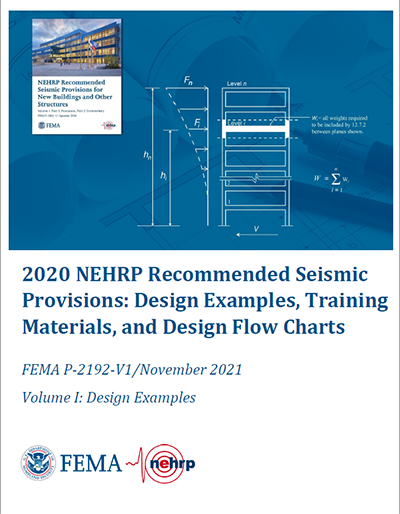
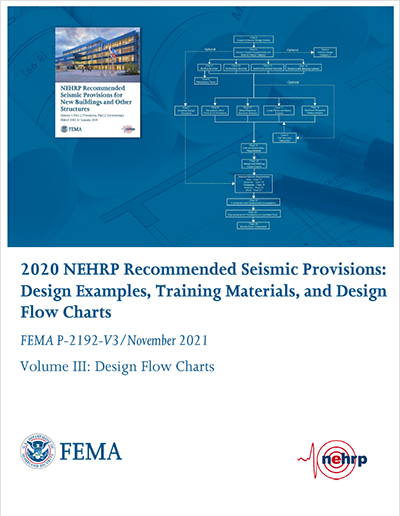
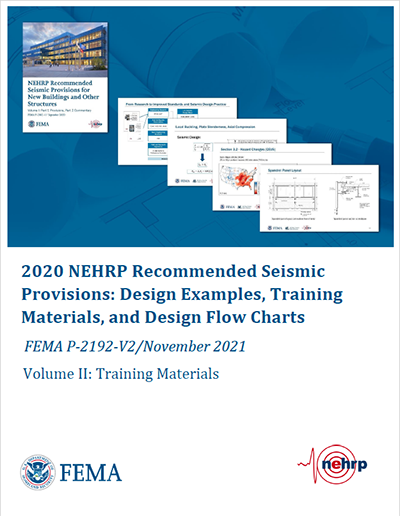
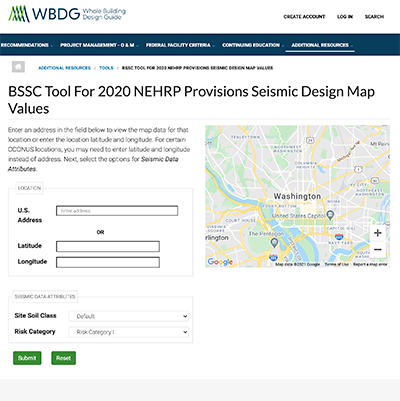

Seismic design maps illustrate the varying earthquake demands considered in the design of buildings and other structures across the U.S. and territories. These maps also provide general earthquake hazard information and informing earthquake risk reduction projects. Learn more
The webinar series is organized by the eight chapters in the 2020 NEHRP Recommended Provisions: Design Examples, and serves as part the FEMA NEHRP/BSSC outreach and education effort. Registration for the webinar series is free (space is limited). CEUs (for AIA and ICC) and certificates of attendance for PDHs and will be provided to those who attend the live webinars. Learn more
Developed by the National Institute of Building Sciences Building Seismic Safety Council (BSSC) Provisions Update Committee (PUC) for the Federal Emergency Management Agency (FEMA), the NEHRP Recommended Seismic Provisions for New Buildings and Other Structures (NEHRP Provisions) help translate new knowledge and recent research results for improving national standards and codes. The Provisions are a state-of-art resource and reference document for design professionals and standard and code-development organizations. Learn more
Should you have any additional questions about the Building Seismic Safety Council or would like to know more about the council’s activities, please contact:
Senior Director, Provisions & Standards
National Institute of Building Sciences